
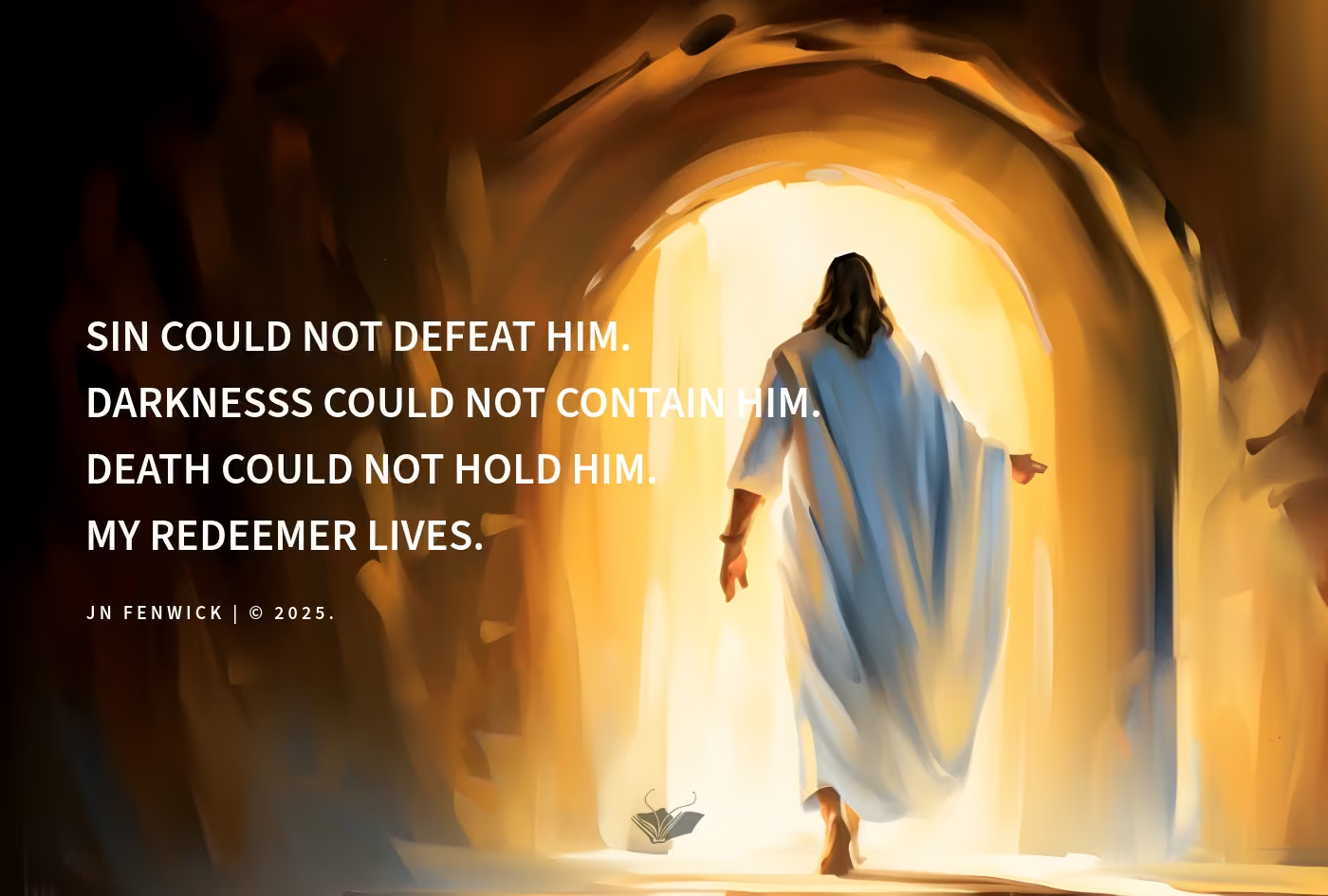
The Tomb is not just the place where Jesus’ body lay following His crucifixion, it becomes the place of His Victory over Death.
Following His death, Jesus was laid to rest in the tomb of Joseph of Arimathaea, a wealthy man and follower. Joseph wrapped Jesus’ body in linen cloths with spices and laid it in his own new tomb. Then, before he and Jesus’ followers departed, a large stone was rolled in front of the entrance to secure it (Matthew 27:60).
The Tomb represents both separation and victory.
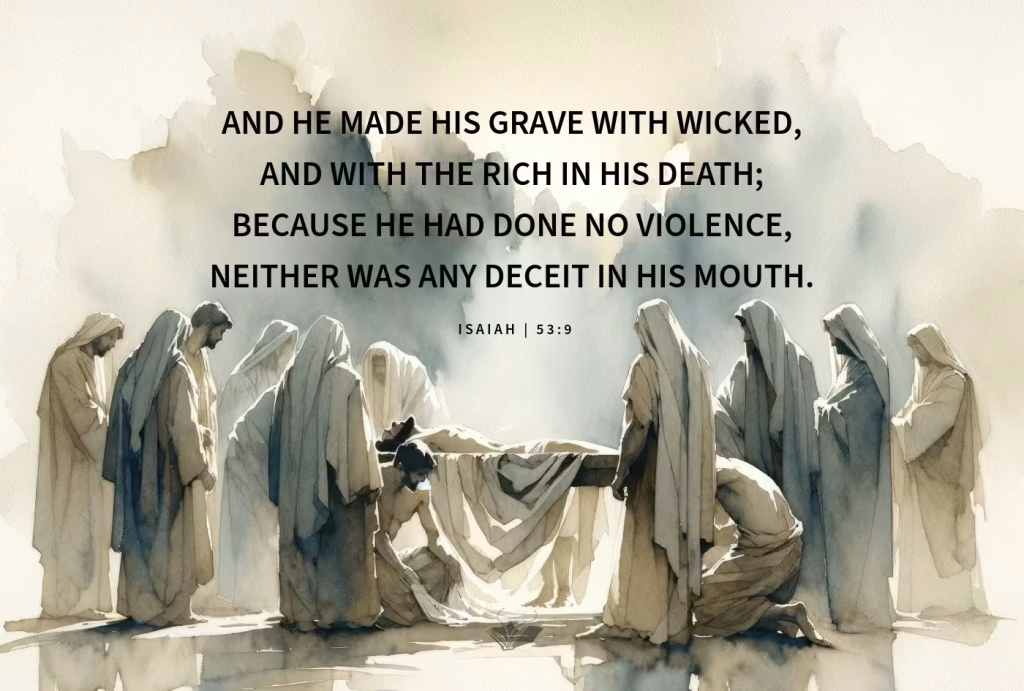
The act of laying Jesus in a new tomb fulfilled the prophecy in Isaiah 53:9, “And He made His grave with the wicked, and with the rich in His death; because He had done no violence, neither was any deceit in His mouth.“
The rolling of the stone and the sealing of the tomb represent the temporary separation between Jesus and the world. This separation would not last. Death could not hold Him. He would rise again just as He promised.
Guards are posted at Jesus’ tomb.
Aware that Jesus had spoken of His death and resurrection (Matthew 17:22-23; Luke 18:31-33), the Pharisees went to Pilate and requested guards be posted at the tomb. Why? Fear motivated them. They were afraid His followers would take Jesus’ body and then claim He had risen. In their minds, this would be worse than the “crimes” they had crucified Him for.
Little could they know or even begin to fathom that despite their efforts, the presence of the guards could not prevent what was to come. For nothing can thwart the will of God. Not even death itself.
A solemn day of mourning.
Holy Saturday was a solemn day of mourning and uncertainty for Jesus’ disciples and followers. Though Jesus had told them of His resurrection, they did not fully grasp what it meant. I can imagine hope filled their hearts, but sadness also. After witnessing Jesus’ brutal death and laying Him to rest, they were likely feeling lost and overwhelmed.
As Saturday was the Sabbath Day in Jewish custom, no one visited the tomb. Instead, the disciples and followers remained behind closed doors.
Easter morning, the Miracle is revealed.
The Gospel of John tells us that Mary Magdalene was the first person to arrive at the tomb of Jesus on Easter morning. Scripture tells us she found the stone rolled away and the tomb empty. She then ran to tell Peter and John, who went to the tomb to see for themselves. They indeed found it empty. They knew what Jesus had told them, knew He’d promised to return after three days. I can only imagine what they must have been feeling. Dare they believe?
Jesus appears to Mary Magdalene.
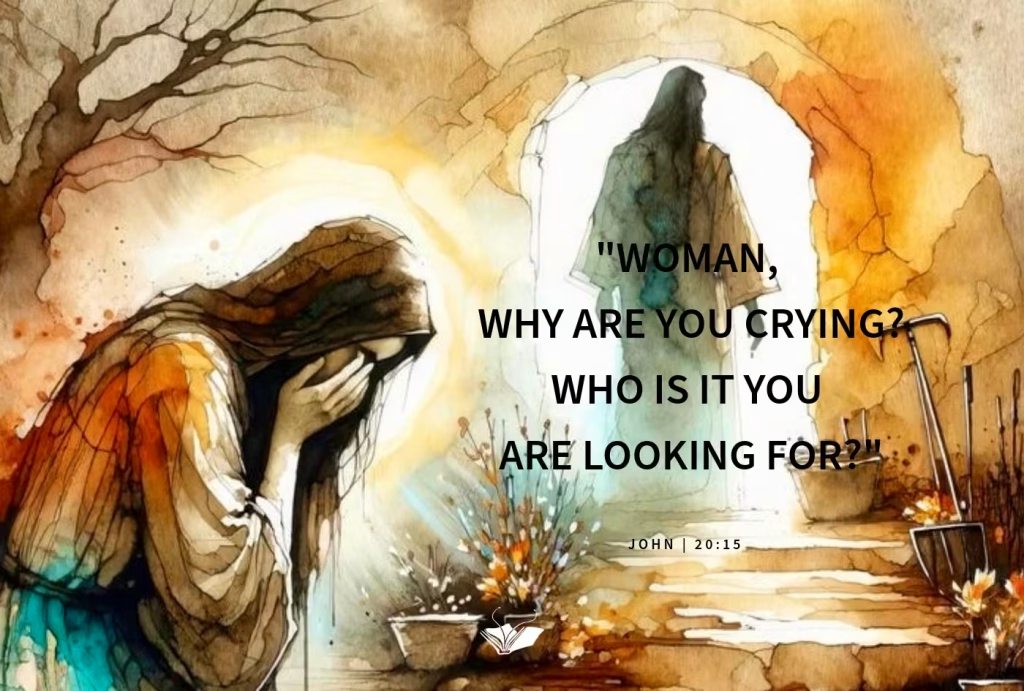
I’ve often marveled that Mary Magdalene was the first to see the Risen Lord. Then again, after Jesus had saved her, she remained a faithful servant, staying beside Him until the end. I like to imagine Jesus sought to comfort her as she stood weeping outside His empty tomb. But also, because He knew she would faithfully carry His words back to the disciples.
John 20:11-18
11Now Mary stood outside the tomb crying. As she wept, she bent over to look into the tomb 12and saw two angels in white, seated where Jesus’ body had been, one at the head and the other at the foot.
13They asked her, “Woman, why are you crying?”
13“They have taken my Lord away,” she said, “and I don’t know where they have put him.” 14At this, she turned around and saw Jesus standing there, but she did not realize that it was Jesus.
15He asked her, “Woman, why are you crying? Who is it you are looking for?” Thinking he was the gardener, she said, “Sir, if you have carried him away, tell me where you have put him, and I will get him.”
16Jesus said to her, “Mary.” She turned toward him and cried out in Aramaic, “Rabboni!” (which means “Teacher”).
17Jesus said, “Do not hold on to me, for I have not yet ascended to the Father. Go instead to my brothers and tell them, ‘I am ascending to my Father and your Father, to my God and your God.’” 18Mary Magdalene went to the disciples with the news: “I have seen the Lord!” And she told them that he had said these things to her.
Jesus appears to His disciples.
That evening, as His disciples were gathered behind locked doors for fear of the Jewish leaders, Jesus came to them. John 20:19 tells us that He, “Came and stood among them and said, ‘Peace be with you!’ After He said this, He showed them His hands and side, and they were overjoyed when they saw the Lord.”
The Resurrection is the fulfillment of God’s plan for redemption.
Jesus’ resurrection breaks death’s power over humanity, offering hope of Eternal Life to all who believe. It also validates that Jesus truly is the Messiah, God’s Son, and our Savior. The One who conquered sin and death.
Death is not the final word. It’s not the end for believers. For as Jesus told us, “I am the resurrection and the life. The one who believes in me will live, even though they die; and whoever lives by believing in me will never die,” (John 11:25-26).
Death Could Not Hold Him
JN Fenwick (© 2023-2025) | mothjournal14 | Images from Adobe Stock Images | Licensed for use | Music: A King is Born by Klaus Zimmer from the Royalty Free Soundtrack Library, Vol. 5
The stone was rolled away
when she went on the third day.
An angel stood instead
at the graveside of her dead.
“They have taken Him away.
I know not where He is laid.”
“Do not look for Him inside.
That is not where He abides.
For He has conquered death.”
Sin could not defeat Him.
Darkness could not contain Him.
Death could not hold Him.
Your Redeemer Lives.
By His wounds we have been healed.
The covenant is sealed.
He was sent, not to condemn.
But to save the souls of men.
That whoever believes in Him
is forgiven of their sins.
And by His sacrifice,
we are born into New Life.
Sin could not defeat Him.
Darkness could not contain Him.
Death could not hold Him.
Our Redeemer Lives.
JN Fenwick (© 2023-2025)
© 2025 JN Fenwick | mothjournal14 | All rights reserved.
Discover more from mothjournal14
Subscribe to get the latest posts sent to your email.
